Article
SmartHTC Go: Turn Smart Meter Data into Measured Heat Loss
You already have the data. Now you can use it to understand how buildings actually perform. Every smart meter is generating a detailed record of how a home uses energy. Until now, turning that data into a meaningful measure of the building itself has required additional monitoring, hardware and time. SmartHTC Go changes that.
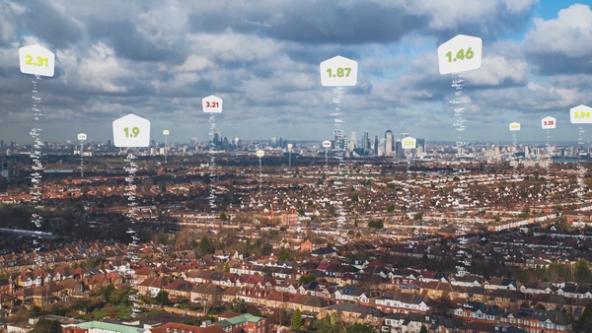
SmartHTC Go uses historical half-hourly energy consumption data to estimate the heat-loss characteristics of an individual home - with no hardware, no site visit, and no waiting for winter.
For organisations that already have access to energy data, this creates a new opportunity: turn energy consumption data into actionable building-performance intelligence.
From energy data to building performance
SmartHTC Go is a zero-hardware version of our validated SmartHTC heat-loss measurement technology.
It requires:
- Historical half-hourly energy consumption data
- Local weather data, which is handled automatically by SmartHTC Go
The result is an individualised Heat Transfer Coefficient (HTC), a measure of how quickly a building loses heat to its surroundings.
That means you can move beyond assumptions about insulation, airtightness and thermal bridging and start making decisions based on how the building actually performs.
And because SmartHTC Go can use historical data, a home can be assessed at any time using data from the previous winter.
No hardware. No waiting. No site visit.
For an organisation assessing hundreds, thousands or millions of homes, this changes the economics of building performance assessment.
Instead of installing sensors in every property, you can screen an entire portfolio using data you already hold.
How accurate is it?
There is an important difference between SmartHTC Go and conventional heat-loss calculations.
Traditional methods such as RdSAP and BS EN 12831 estimate heat loss from a survey of the property and a series of assumptions. SmartHTC Go uses actual energy consumption from the individual home, combined with weather data, to infer its thermal performance.
Our evidence shows a substantial improvement in both accuracy and precision.
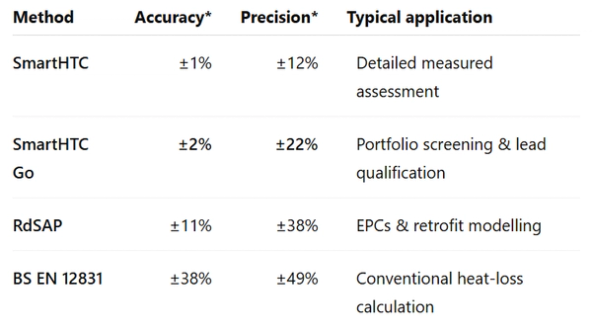
*Accuracy refers to bias; precision describes the variability of individual results.
The SmartHTC Go figures are approximately 5× more accurate and 2× more precise than the conventional calculation methods shown above.
More importantly, the underlying evidence comes from hundreds of real homes rather than theoretical modelling. SmartHTC & SmartHTC Go have been tested using data from more than 500 homes generated through collaborative projects with the Energy Saving Trust & the Department of Energy Security and Net Zero.
Why does measured heat loss matter?
A building's actual heat loss is one of the most important pieces of information when deciding what to do with it.
If you don't know how a building actually performs, you risk:
- Targeting the wrong homes for retrofit
- Over-specifying heating systems
- Under-specifying heating systems
- Sending surveyors to unsuitable properties
- Recommending measures that don't deliver the expected benefits
- Spending marketing budget on customers who aren't suitable for a particular proposition
Measured building performance provides a different starting point.
Instead of asking “What should this house perform like?”, you can ask “How does this house actually perform?”
A proven opportunity in heat pump design
The potential value is particularly clear in heat pump installation.
As part of the government-funded Heat Pump Ready programme, BTS and Elmhurst compared measured heat loss with conventional BS EN 12831 calculations across more than 50 homes.
The conventional calculation was outside the measurement uncertainty range in 70% of homes. Heat loss was overestimated in 59% of homes, contributing to oversized heat pump specifications.
The resulting oversizing was estimated to add an average of £2,100 to the capital cost of an installation through larger equipment and associated upgrades to radiators and pipework.
This demonstrates an important commercial opportunity:
Better information about the building can reduce both the cost and risk of the intervention.
SmartHTC Go makes that type of building-performance information available before a surveyor visits the property.
It can be used to screen and sense-check properties at scale, while detailed room-by-room design can still be carried out where required.
Built for organisations that already have the data
This is where SmartHTC Go is different.
If you already have half-hourly energy data, you already have what is needed to understand the thermal performance of the homes you serve.
SmartHTC Go can be integrated directly into existing platforms through our API.
Energy suppliers and energy platforms
Add building-performance intelligence to existing customer journeys.
For example:
- Identify homes with high heat loss
- Pre-qualify customers for heat-pump propositions
- Identify properties where insulation may be a priority
- Personalise energy-efficiency advice
- Improve targeting of retrofit campaigns
- Provide customers with information about the performance of their home
- Build new services around measured building performance
Instead of simply telling a customer how much energy they use, you can start telling them something about why their home uses it.
Heat pump installers and retrofit businesses
Use SmartHTC Go before committing time and money to a site visit.
It can provide:
- A rapid initial heat-loss assessment
- A way to identify potentially suitable properties
- An independent sense-check of calculated heat loss
- A way to identify unusually high or low-performing homes
- A measured baseline to support more detailed design
For complex projects, standard SmartHTC remains available where a higher-precision in-use measurement is required.
Housing associations and local authorities
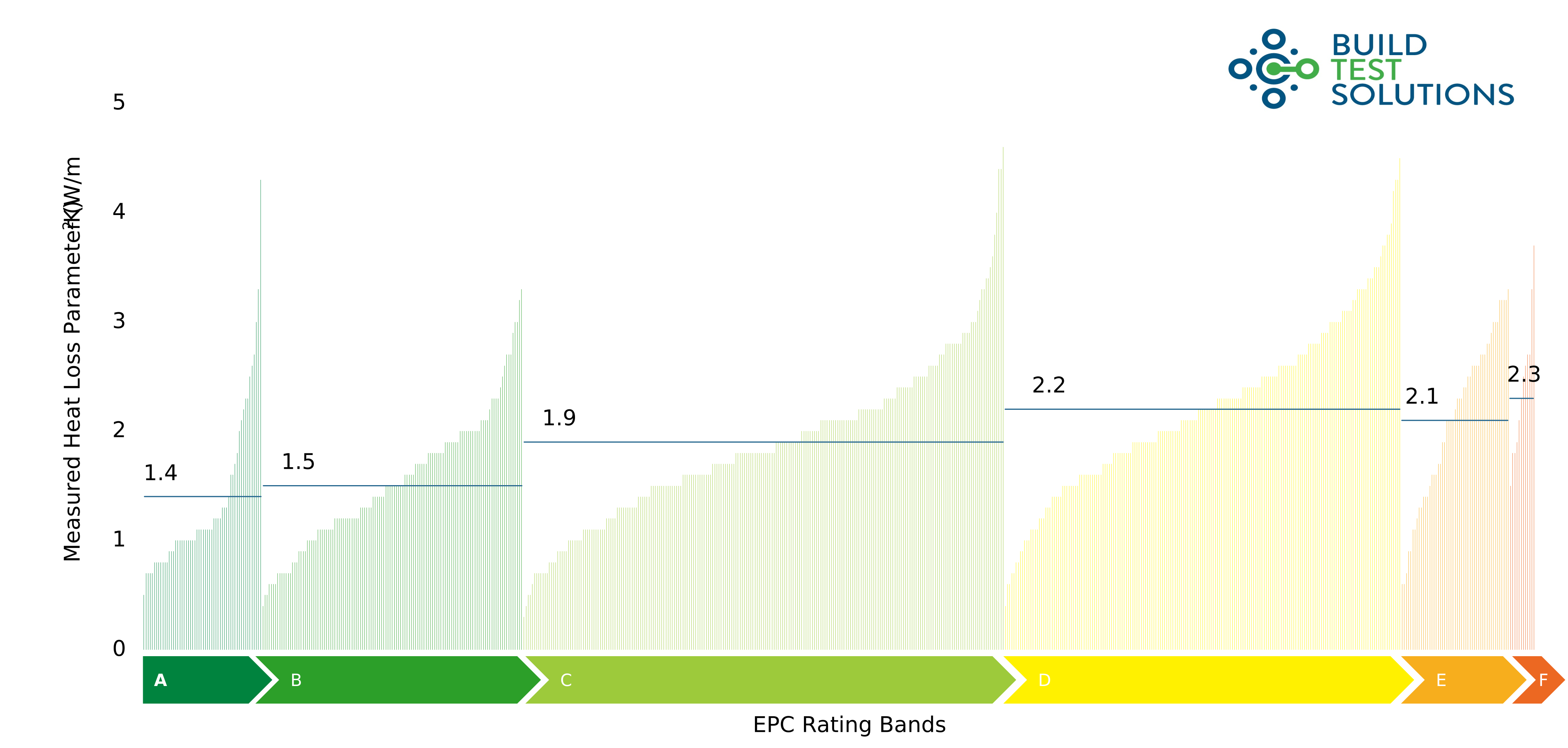
Assess entire portfolios rather than relying solely on EPCs and property archetypes.
SmartHTC Go can help you:
- Rank properties by actual thermal performance
- Identify potential high-priority homes
- Target retrofit investment
- Compare measured performance with modelled performance
- Assess large numbers of properties without installing hardware in every home
- Build a better evidence base for future investment decisions
SmartHTC vs SmartHTC Go
Choose SmartHTC Go when you need scale and speed.
It is designed for:
- Portfolio screening
- Lead qualification
- Initial heat-pump assessment
- Retrofit triage
- Customer engagement
- Automated building-performance services
Choose standard SmartHTC when you need the highest-precision assessment.
Standard SmartHTC uses energy, internal temperature, and weather data collected over a winter monitoring period and is better suited to detailed retrofit assessment, performance verification, and more complex properties.
The two products are complementary.
Go gives you building-performance intelligence at scale. SmartHTC provides deeper measurement where you need it.
Integrate building performance into your existing service
SmartHTC Go is available through the SmartHTC browser interface or via API.
The API allows organisations to build building-performance assessment directly into their own software, customer journeys and data platforms.
Your data goes in. Building-performance intelligence comes out.
You don't need to build a new measurement system, install hardware or wait for another winter.
Have energy data? Let's show you what it can do.
If you already hold half-hourly energy data for homes, we'd like to demonstrate what SmartHTC Go can do with it.
Whether you're an energy supplier, technology platform, heat-pump installer, retrofit provider, housing association or local authority, we can help you explore how heat-loss information could be integrated into your existing services.