Article
CIBSE TM71: A New Standard for Measuring Heat Transfer in Buildings
New guidance marks an important milestone for Heat Transfer Coefficient (HTC) measurement and the future of evidence-based building performance.
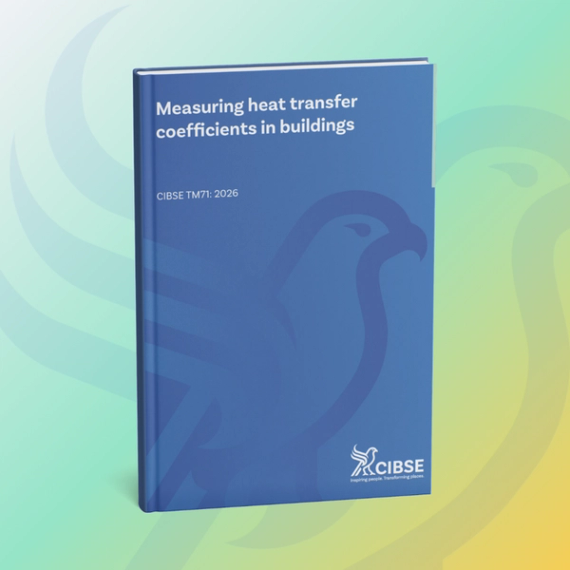
CIBSE TM71: Measuring Heat Transfer Coefficients in Buildings is a new Technical Memorandum providing the industry's first comprehensive framework for understanding, measuring and interpreting Heat Transfer Coefficients (HTC) in buildings. Crucially, the document brings together definitions, data requirements and practical recommendations for measurement and interpretation.
The publication is significant in that it stands to serve as the basis for helping to more clearly prescribe HTC measurements within regulations, other standards and as part of procurement on projects. All helping to advance the industry towards improved accountability and performance verification in buildings.
We are particularly proud that our Technical Director, Dr Richard Jack, served as one of the lead authors alongside Professor David Allinson of Loughborough University, working with an independent steering group made of leading experts.
Why does HTC matter?
A building's Heat Transfer Coefficient describes how quickly it loses heat through its fabric and ventilation. It is one of the clearest indicators of overall thermal performance.
HTC influences many important decisions, including:
- Heat pump sizing
- Retrofit pathways
- Quality control and assurance
- Building performance evaluation
- Carbon reduction strategies
- Understanding the performance gap
Historically these values have almost always been calculated from design information and assumptions. While this provides a useful prediction, it cannot account for the many variables that occur once a building has actually been constructed and occupied.
As the industry increasingly focuses on delivering better quality buildings that perform as intended - not simply comply on paper - the ability to measure HTC is essential.
From prediction to proof
One of the key messages within TM71 is that measurement should complement, rather than replace, modelling.
Measured HTC allows professionals to validate assumptions, identify unexpected heat losses and gain confidence that buildings are performing as expected. Where measured and calculated values differ significantly, the data can help uncover issues relating to design assumptions, workmanship, construction quality or modelling inputs.
Rather than asking:
"What should this building do?"
the industry can increasingly ask:
"What is this building actually doing?"
That shift has significant implications for quality assurance, compliance and better decision-making throughout a building's lifecycle.
Ensuring a level playing field
Several different methods now exist for measuring Heat Transfer Coefficients. Until now, there has been limited guidance explaining how these approaches relate to one another or how results should be reported and interpreted.
TM71 addresses this by providing:
- Common terminology and definitions
- Guidance on available measurement methods
- Recommendations on selecting the appropriate approach
- Standardised reporting principles
- Advice on interpreting measured results
The result is greater consistency across the industry, making measured data easier to understand, compare and use with confidence.
Supporting the transition to performance-led buildings
Although HTC measurement has traditionally been associated with research projects and domestic buildings, its applications are expanding rapidly.
The new guidance recognises its value across both domestic and non-domestic buildings and highlights its relevance for:
- Building performance specialists
- Retrofit professionals
- Designers and consultants
- Contractors
- Developers
- Housing providers
- Local authorities
- Government and regulatory bodies
- Accreditation schemes
As policies such as the Warm Homes Plan, Future Homes Standard and wider building performance initiatives place increasing emphasis on outcomes; objective measurement will play an increasingly important role in demonstrating that buildings deliver what was intended.
What this means for the industry
At Build Test Solutions, we've long believed that measurement is essential to closing the performance gap.
TM71 provides the industry with an important framework that supports this vision. By encouraging robust methodologies, consistent reporting and greater confidence in measured data, it helps shift building performance assessment from prediction towards verification.
Ultimately, better measurement leads to better decisions, whether that's designing more effective retrofits, specifying correctly sized heating systems, validating completed projects or improving the accuracy of future models.
As building performance becomes increasingly central to regulation, investment and occupant outcomes, TM71 represents an important milestone in helping the industry move from assumptions to evidence.
You can find and download CIBSE TM71: Measuring heat transfer coefficients in buildings HERE