Article
Make No Assumptions: BTS Measurements Reveal True Performance of Historic Homes in New Report
Build Test Solutions (BTS) is proud to have supported a significant new research project published by Historic England: The Historic Building Energy Performance Potential Demonstrator Project (Report 9253).
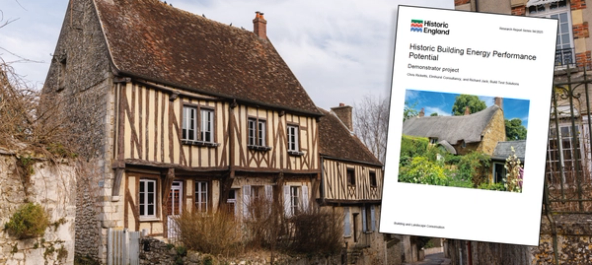
The report explores the complexities of improving energy efficiency in our heritage building stock. Central to the findings was the role of in-situ measurements - supported by BTS technology - which provided a detailed look at how these buildings perform in the real world versus how they are represented on paper and through more conventional visual inspection based surveying.
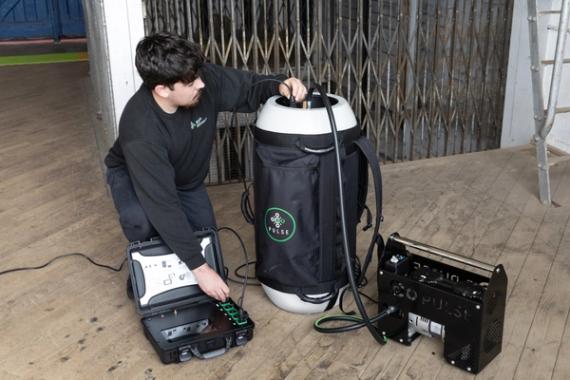
The Failure of ‘Standard’ Assumptions
One of the most striking outcomes of the project is the clear demonstration of the uniqueness of individual historic homes. While Energy Performance Certificates (EPCs) rely on default values and the rule of averages, in-situ measurements revealed the specific nuances of each demonstrator building. These real-world tests showed that the actual thermal performance and air permeability of historic buildings often differ significantly from what standard assessments suggest.
The study involved carrying out airtightness, ventilation, in-situ U-value and heat transfer coefficient (HTC) measurements across 6 different historic buildings of varying size and construction. The largest observed shift in EPC score was a positive gain of 17 EPC points, with others gaining anywhere from 5 to 13 points. Conversely one home was found to perform notably worse than was otherwise calculated, with a loss of 16 EPC points.
Why Measurement Matters
Regardless of our path to decarbonising existing buildings, this report serves as a vital evidence base for government, policymakers, and local authorities. For those who own, manage, or survey historic buildings, the message is clear: you cannot manage what you do not measure.
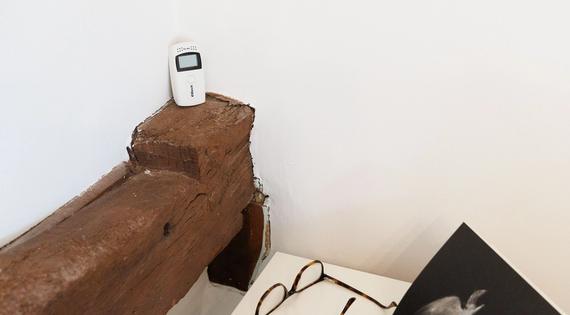
Relying solely on generic EPC data and material libraries risks poorly informed retrofit decisions that could lead to unintended consequences for both the building’s fabric and the occupant's health and comfort. By adopting a "measurement-first" approach, decision-makers can ensure that interventions are proportionate, effective, and respectful of the building’s heritage.
A Call to Action for the Heritage Sector
The report makes a series of considered recommendations and suggested next steps. The most central of which is that our approach to upgrading the energy efficiency of buildings must be guided by prioritising an ever more data and evidence-based approach to building assessment. Proposed within is an ‘Enhanced Technical Suitability Assessment’, very much in line with the BS 40104 standard for the assessment of dwellings for retrofit framework.
It’s a must read report and kudos to Historic England. We all know and respect that historic buildings are tremendously unique but now we also know that uniqueness goes far deeper, directly impacting energy efficiency and the decisions that we must ultimately make with regards to fabric, ventilation and heating system upgrades.
Read the full report here: Historic England Research Report
To learn more about how BTS can support your building performance evaluation projects, get in touch!