Case Study
Beyond the Calculator: Measuring Heat Loss in a Solid Stone Farmhouse
When it comes to historic properties with solid stone walls, theoretical models often struggle to capture the nuances of real performance. In this case study, we look at how Matt Jones, a sustainability-driven homeowner, worked with Benny Talbot from Bath & West Community Energy to prove that "hard-to-treat" doesn't have to mean "hard to heat."
Key Takeaways:
- Measured heat loss was 30% lower than calculated
- Successfully used SmartHTC with unmetered biomass fuel
- Significant capital cost savings and reduced disruption with a smaller proposed heat pump
- Quantitative data backs up knowledge & experience for added confidence
The Challenge: Stone Walls and "Best Guesses"
Matt lives in a beautiful, historic farmhouse in an off-gas area. Like many owners of period properties, he is highly motivated by the low-carbon journey and wanted to transition from a biomass pellet boiler to a high-efficiency heat pump. These pellets don’t come with an energy meter, so gathering the energy consumption data for a SmartHTC measurement was going to be harder than usual.
Solid stone walls are difficult to model accurately. BaU is to use a ‘typical’ U-value for these walls, but they’re anything but typical, and all unique. For this reason, a single value for a wide wall type might not work, and there is a tendency to assign them a "worst-case" U-value, which can lead to oversized heat pumps.
Benny Talbot, from the Bath & West Community Energy, had already calculated the heat loss for the farm using the excellent Spruce software. The calculated peak heat load was around 12kW, meaning that the design was between a 12 and 15kW heat pump. This was already a significant finding, as the EPC had implied a 16.3kW heat loss, meaning the house was potentially too leaky for any install except a very expensive multi-heat pump cascade system. But Benny and Matt both had a feeling from experience that these walls might be holding onto heat better than the look-up tables suggest.
Measuring Unmetered Fuel for SmartHTC
To get a definitive answer, they turned to SmartHTC. SmartHTC is a tool to measure the Heat Transfer Coefficient (HTC) of buildings, which is the total rate of heat transfer between inside and out per degree of temperature difference. Usually, this process relies on service meter readings, but because Matt’s primary heat source was a biomass boiler, there was no meter to rely on.
To measure the unmetered, Matt weighed and recorded the quantity of biomass pellets used during the measurement period. By combining the weight of the fuel with its known calorific value, they were able to calculate the energy input in kWh. This data allowed a SmartHTC measurement to generate an accurate Heat Transfer Coefficient (HTC) for a property.
The Results: A 30% Performance Gap
The results confirmed their suspicions. The measured heat loss was 30% lower than the initially calculated value.
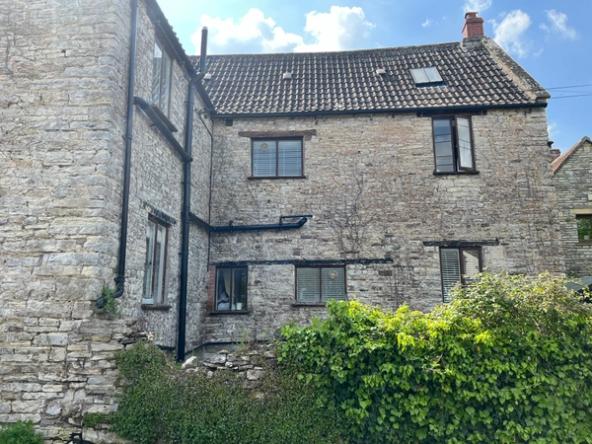
This discrepancy isn't a fault of the modelling software, but rather a reflection of the inherent variability of traditional buildings. Each building is different, with different stones, mortar, and crucially, different shapes within the construction trapping pockets of air, and reducing heat transfer. All this means that seemingly similar buildings and walls vary widely, and they can perform far better than a standard calculation suggests. A quick look at the picture of the walls gives a real visual feel for this variety, and how it would be difficult to capture this in a single generic assumption for all stone walls.
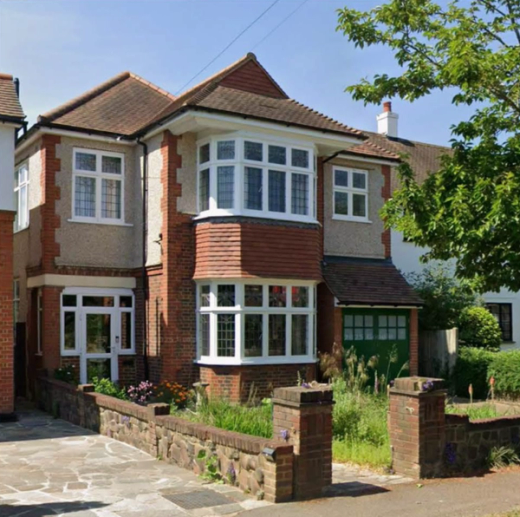
While this farmhouse demonstrated the hidden efficiency of stone, we’ve seen similar results with 1930s solid brickwork. Read our Surbiton case study here to see how measured data helped downsize another heat pump installation.
Impact: Precision Sizing for Cost Saving and High Efficiency
Armed with a measured 30% reduction in heat loss, the project saw immediate benefits:
- Capital Savings: A smaller, more cost-effective heat pump can now be specified, along with fewer radiator replacements, giving a capital saving of around £1,000.
- Operational Efficiency: Sizing the unit to the actual heat loss of the property can increase the chances of better running efficiency, meaning lower running costs. The projected efficiency (SCOP) of the system has increased from a worst-case of 3.6 to 4.15 as a result of the lower heat demand, which also makes running the system at a lower flow temperature of 45°C more practical (also good for high efficiency).
Matt is both a project coordinator for low-carbon projects with Bristol City Council, and an active member of his local community, providing advice to others on their own retrofit journeys. This project serves as a useful case study for his neighbours and projects in Bristol more broadly, proving that data can reduce the risk for heat pump transitions in older homes.
"Although a final design is now needed, we know that we definitely don't need to go for the bigger heat pump size, and with modulation, the 12kw will provide the heat for the building with a confident margin for error." Matthew Jones, Homeowner & Bristol City Council
"Being able to cross-check our heat pump modelling results against actual quantitative data is great, especially for these unique properties. It allows us to reduce our reliance on worst-case assumptions, and provide bespoke advice, acknowledging that every traditional building performs differently." Benny Talbot, Bath & West Community Energy
“Measurement tools are literally useless without users, and it’s always a brilliant feeling to see people pick them up and use them for practical outputs. I’m really impressed with how Matt & Benny worked to get an accurate SmartHTC measurement, despite not having the normal meters to work from.” Richard Jack, Build Test Solutions