Article
MEES compliance: What Barke v Fenland DC means for landlords
Private rented sector regulation has tightened significantly in recent years, and the Minimum Energy Efficiency Standards (MEES) now sit at the centre of a landlord’s compliance obligations. The recent Barke & Anor v Fenland District Council case highlights an essential truth: enforcement depends entirely on evidence available at the time of the alleged breach, not on retrospective EPC improvements or verbal assertions of work completed.

For private landlords, the ruling reinforces one simple message:
Measurable building performance evidence is no longer optional - it is essential.
Build Test Solutions (BTS) provides the UK’s most comprehensive suite of measurement tools and services designed specifically to help landlords comply with MEES, validate retrofit works, and defend against enforcement action.
MEES: The compliance baseline
MEES regulations make it unlawful to let a domestic or non-domestic property below the prescribed EPC threshold (currently an E band but set to tighten), unless a valid exemption has been properly registered. Landlords must be able to demonstrate a valid EPC, evidence of improvement works undertaken and evidence supporting exemption claims where improvements are not cost-effective or technically feasible. Records showing when works were carried out and what impact they had are also a key requirement.
This final point is exactly where the Barke case becomes critical.
What Barke v Fenland DC Demonstrates
The tribunal in Barke made clear that:
- EPCs must be accurate at the time of letting. Later certificates cannot negate earlier non-compliance.
- Exemptions must be properly evidenced. Incomplete documentation will not protect a landlord.
- Landlords are responsible for proving the condition and performance of their properties. Absence of evidence is treated as lack of compliance.
In essence, landlords must create and retain robust, time-stamped, objective building-performance evidence.
Why measurement and verification now matter more than ever
MEES enforcement bodies, including local authorities, increasingly look for measured performance evidence, not assumptions or empty claims. Indeed, EPCs themselves lean heavily into default values and presumptions; real buildings often behave differently.
By using building-performance measurement, landlords can:
- Validate fabric and heating system performance.
- Support (or challenge) EPC inputs.
- Demonstrate the true impact of retrofit works.
- Build a defensible compliance file for any future inspection or dispute.
- Avoid the pitfalls illustrated in Barke.
Support for landlords with staying compliant
Build Test Solutions provides a focused suite of building-performance measurement tools that directly support MEES compliance and help landlords avoid the evidential pitfalls highlighted in Barke v Fenland DC.
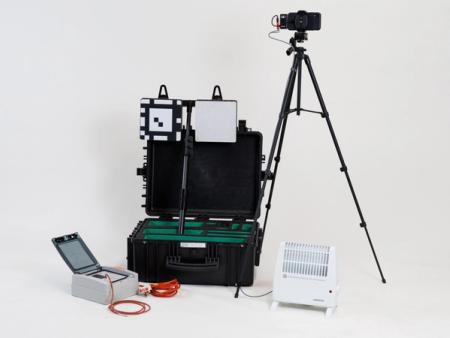
Using Heat3D, landlords can capture high-resolution thermal imagery that reveals insulation defects, thermal bridges and other fabric weaknesses that often undermine EPC accuracy. This visual evidence is invaluable both for identifying improvement opportunities and for demonstrating that retrofit works have delivered measurable fabric enhancements.
Complementing this, SmartHTC and Mould Risk Indicator offers a whole-building heat-loss measurement along with building and ventilation health insights derived from real-world temperature and energy-use data. By quantifying the actual thermal performance of a property rather than relying on modelled assumptions, SmartHTC gives landlords robust, time-stamped evidence that can support EPC reassessments, validate improvement measures, and underpin exemption applications where further upgrades are not technically or economically viable.
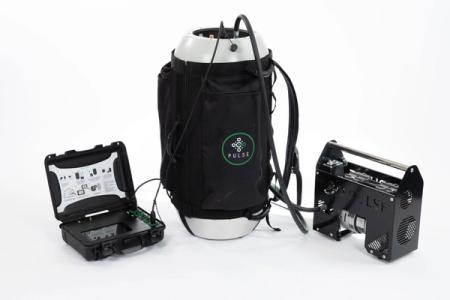
To complete the picture, Pulse Airtightness along with Ventilation Flow Rate Testing provides a rapid, non-intrusive method of verifying the airtightness of the building fabric at low pressure, along with evidence of both the appropriateness and performance of installed ventilation systems. Such measurements can be used to evidence improvements such as draught proofing, updating the EPC to more accurately reflect reality, and demonstrating compliance through objective, defensible data.
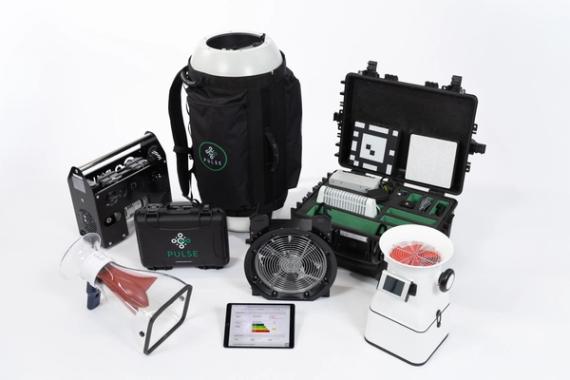
Together, Heat3D, SmartHTC, Mould Risk Indicator, Pulse and ventilation testing all create a coherent evidence base that enables landlords to document the real performance of their properties, reduce regulatory risk and present a comprehensive compliance record to local authorities or enforcement bodies.