Article
Is the retrofit industry wasting billions?
A report from retrofit consultancy Domna, published in November 2026 and covered by Inside Housing, estimates that housing associations could save £1.6 billion annually by challenging contractor pricing, with a further £389 million potentially available through better coordination of repairs and reduced ongoing maintenance costs. The findings highlight a significant problem: housing providers are not always getting value for money from their retrofit investment.
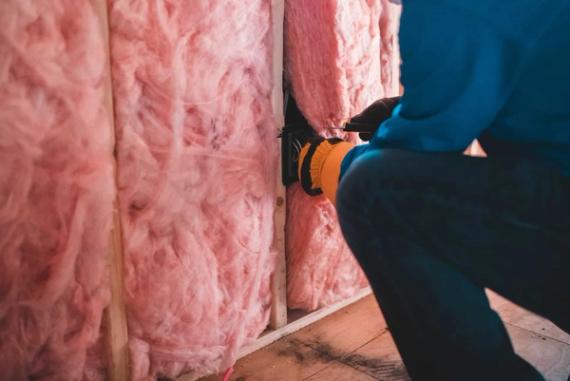
In one example, contractor prices were 93% above benchmark levels for low-energy lighting, 87% higher for thermostatic radiator controls and 79% higher for internal wall insulation.
Perhaps the most revealing finding was a retrofit programme initially estimated at £2.8 million. Once individual properties were assessed to establish which improvements they actually needed, the projected cost fell to £1.9 million.
That's £900,000 potentially saved simply by taking a more informed approach to planning the work.
The report calls for better procurement, cost benchmarking and property-level planning. But it also raises a wider question:
How much more could be saved if we better understood how buildings actually perform before deciding what needs improving?
Are we spending money on problems that don't exist?
Retrofit decisions frequently begin with an EPC, a survey or an assessment of a building's assumed performance.
These are valuable starting points, but they don't necessarily tell us how an individual property performs in practice.
Two apparently identical homes can have very different levels of heat loss. Insulation that appears inadequate on paper may be performing perfectly well, and an apparently straightforward heating or ventilation problem may have a completely different underlying cause.
Without measured evidence, there's a risk of over-specifying improvements, installing unnecessary measures or overlooking the issues that actually need attention.
This is where building performance measurement can make a real commercial difference.
By measuring actual heat loss, airtightness and thermal performance, housing providers, contractors and consultants can move beyond assumptions and make more confident decisions about where to invest.
And the savings can be substantial.
£5,500 saved on a single social housing retrofit
A vacant social housing property was being prepared for retrofit. The objectives included improving thermal performance, installing a heat pump, addressing mould complaints and improving its EPC rating.
External wall insulation was being considered as part of the proposed improvements.
However, testing using SmartHTC, Heat3D, heat flux plates and ventilation measurement revealed a very different picture.
The walls were performing considerably better than the EPC suggested. The glazing was performing worse, and the mechanical ventilation system was also underperforming.
Instead of investing in unnecessary external wall insulation, the project could focus on replacing the glazing, upgrading ventilation and specifying a smaller heat pump.
The revised approach also reduced the property's mould risk, offering potential longer-term maintenance savings.
The lesson is simple: knowing what doesn't need improving can be just as valuable as knowing what does.
At least £20,000 saved by avoiding the wrong repair
In another example, a newly completed build-to-rent development had passed its usual sign-off procedures, yet residents were reporting cold rooms and unexpectedly high energy bills.
With the cause unknown, the team was considering removing sections of the external façade to investigate suspected insulation defects.
That would have been expensive, disruptive and potentially unnecessary.
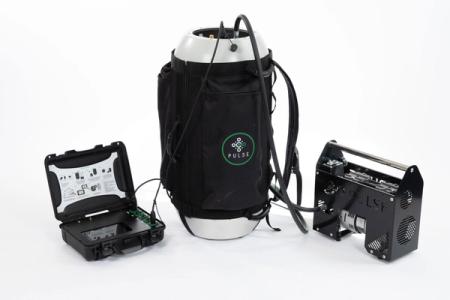
SmartHTC testing confirmed that the building was losing more heat than expected. However, Pulse testing showed that airtightness met specification, while Heat3D measurements indicated that the external building elements were performing as intended.
Further investigation identified an unexpected heat loss path through the party floor and ceiling construction.
Rather than undertaking major façade works, the actual defect could be addressed through relatively minor remedial measures.
The investigation also helped resolve uncertainty over the cause of the problem, avoiding further wasted surveys and unnecessary disruption.
For developers, contractors and housing providers, the implications extend beyond the immediate saving. Better diagnosis can reduce delays, protect project margins and help prevent repeated remedial work.
Damp and mould: The cost of treating symptoms
The financial consequences of poor diagnosis aren't limited to retrofit projects.
In a development of 1960s social housing flats, persistent damp and mould complaints had resulted in repeated interventions, including mould washes and additional ventilation openings.
Despite the expenditure, complaints continued.
Pulse airtightness testing revealed that the properties were exceptionally airtight, making the existing intermittent mechanical ventilation unsuitable.
With the underlying problem identified, continuous mechanical ventilation could be specified instead of continuing with ineffective treatments.
The project's Mould Risk Indicator subsequently moved from Very High to Low.
For housing providers facing increasing responsibilities under Awaab's Law, identifying the root cause of poor living conditions is about more than reducing costs. It's about protecting residents and delivering lasting improvements.
Better procurement is only half the answer
The Domna report makes an important argument for more transparent contractor pricing, improved benchmarking and better coordination of retrofit programmes.
These are essential steps towards improving value for money.
But even a competitively priced intervention is poor value if it isn't needed.
A housing provider might negotiate an excellent rate for external wall insulation. Yet if the building's walls are already performing adequately, that investment could still be better directed elsewhere.
Equally, replacing a heating system or undertaking expensive remedial work without understanding the cause of poor performance risks spending money without resolving the problem.
There are two questions every retrofit programme should be asking:
- Are we paying the right price for the work?
- Are we paying for the right work?
The first requires better procurement and cost transparency.
The second requires better information about the building.
Together, they offer a more effective way to make limited budgets go further.
What does this mean for testing professionals?
For airtightness testers, surveyors and building performance consultants, this shift towards evidence-led decision-making also presents a commercial opportunity.
In 2025, approximately 55,000 Pulse tests were undertaken across 177 organisations.
That represents an average of around 314 tests per organisation.
At an illustrative charge of £150 per test, this equates to approximately £47,000 in annual testing revenue, with BTS's analysis indicating a potential 5x first-year return on equipment investment.
Individual results will depend on test volumes, operating costs and equipment utilisation, but the figures demonstrate the potential market for measurement services.
The opportunity goes beyond individual tests.
By combining airtightness testing with heat loss measurement, thermal diagnostics and ventilation assessment, testing professionals can offer clients something more valuable than a compliance result.
They can help answer the questions that really matter:
- Where is the building actually losing heat?
- Which improvements are genuinely necessary?
- Could a smaller heating system do the job?
- What's causing persistent comfort or maintenance problems?
- Have completed improvements delivered the expected results?
The commercial opportunity lies in providing answers that help clients avoid unnecessary expenditure, reduce risk and achieve better outcomes.
Making every pound count
The Domna research highlights the scale of the challenge facing social housing retrofit.
With billions of pounds required to improve existing housing stock, funding constraints and increasing regulatory expectations, housing providers cannot afford to waste money on poorly specified or unnecessarily expensive work.
Better procurement is part of the solution. So is better planning.
But understanding how buildings actually perform adds another layer of confidence to investment decisions.
As the BTS case studies demonstrate, relatively modest measurement costs can deliver savings many times greater than the initial investment.
Measurement can help ensure that money is spent where it will make the greatest difference.
Perhaps it's time we stopped asking how much testing costs and started asking how much getting it wrong is costing us.
Make measurement work for you
At Build Test Solutions, we're helping housing providers, contractors, surveyors and testing professionals use measured evidence to make better decisions, avoid unnecessary costs and demonstrate real building performance.
Whether you're planning a retrofit programme, investigating defects or looking to expand your testing services, we'd welcome a conversation about how measurement could add value.
References
Industry research: Domna (November 2026), Closing the Social Housing Retrofit Gap: How Housing Associations Can Unlock Value, Cut Costs and Attract Investment. Report findings covered by James Riding in Inside Housing, 10 November 2026: Housing associations overpay for retrofit works by £1.6bn a year, report finds.