Case Study
Retrofit assessment of the Westminster Abbey Deanery
For centuries, Westminster Abbey has stood as an architectural and cultural landmark, but for this to continue, it must remain functional and resilient for future generations. To ensure the longevity of its buildings, Westminster Abbey is currently undergoing energy efficiency improvements across its estate to reduce energy usage and ensure visitors and residents remain comfortable.
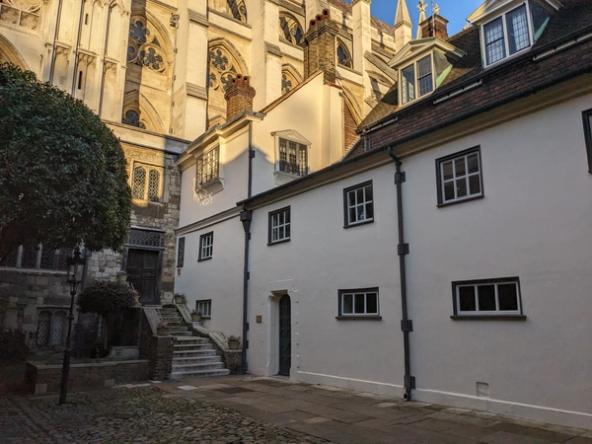
Among the many historic buildings on-site, the Deanery stood out due to its high energy consumption. With some of the building dating back to the 13th century, and modifications added as recently as the last few decades, the Deanery was a good starting point for a data-driven retrofit assessment.
The challenge was how to enhance efficiency without compromising its historical integrity.
To gain a clear understanding of the building’s thermal performance, Westminster Abbey contacted a multi-disciplinary property and construction consultant to carry out a thorough retrofit assessment on the Deanery to help guide future improvements.
Anna Wyse, sustainability manager at Westminster Abbey, explained: “We needed real numbers, not assumptions, because of the age of the property and the various upgrades it had gone through. Without precise data, making informed decisions about upgrades would have been very challenging.”
The challenges of assessing a historic building
Westminster Abbey is prioritising sustainability, with a clear goal to reduce its carbon impact. The Deanery was identified as one of the most energy-intensive residences on the estate, requiring thorough investigation. Thick masonry walls, timber panelling and original metal-framed windows made any traditional assumptions that might be made about thermal performance unreliable. The consultants were brought in to conduct a detailed assessment, but standard evaluation methods proved insufficient for a structure with such a complex history. Their retrofit coordinator explained, “If you just do a visual survey, you miss half the picture. It’s easy to assume a building is losing heat through its walls from outdated or failing insulation, but without measuring, you don’t know the true extent. We needed real-world data to understand what would work and what wouldn’t.”
Bringing in cutting-edge measurement techniques
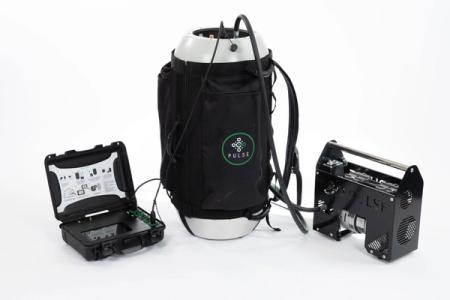
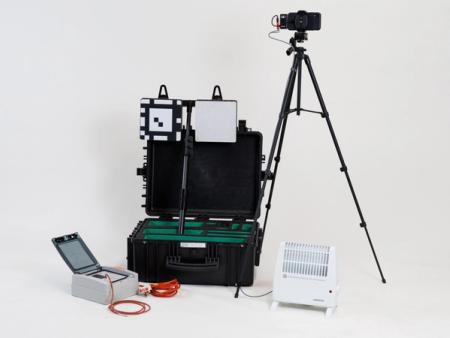
The consultants adopted technology developed by Build Test Solutions (BTS) to gather accurate measurements of the heritage property. Pulse air permeability testing was selected because it could assess airtightness without disrupting the building’s delicate structure. Heat3D was used to measure the U-value of the main solid brick walls of the building, as well as the 13th century stone-walled extension. Temperature and humidity monitoring was also carried out over several weeks to assess moisture risks and the impact this could have on the delicate materials, artwork, and furniture in the Deanery. The results were surprising. The measured airtightness was 10.46m3/m2.h@50Pa – far better than expected for a building of this age and 30% lower than the default used in an EPC. The wall U-values were also much lower (better) than assumed, both for the solid brick walls of the main building (1.7 W/m2K) and also the 13th-century stone walls that make up the oldest wing of the Deanery (0.9 W/m2K). Both values again some 53-55% lower than defaults used in EPCs. This insight enabled Westminster Abbey to be confident that investing in secondary glazing and targeted draught-proofing was the better option over internal insulation options, saving thousands and enabling that money to be targeted elsewhere.
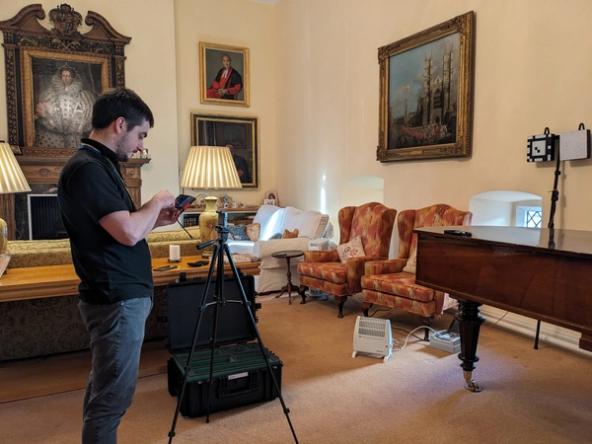
The consultants used the measured U-values and air permeability to calibrate their SAP model of the Deanery to the actual building performance. This calibrated model gives more accurate estimates of energy demand and cost, and in turn more accurately predicts the effect of retrofit measures.
Anna noted: “We were expecting the walls to be a big problem, but they actually performed well. That allowed us to shift our focus to simpler, less intrusive fixes like improving heating controls and tackling draughts.”
For the consultants, the testing validated their approach of their heritage retrofit suggestions. They explained: “This is exactly why accurate measurement matters. Without this data, we might have recommended changes that weren’t necessary, or worse, missed easy wins that will make a real difference.”
The next steps
This project highlights the importance of using real-world data instead of relying on theoretical models. Every historic building is different, and assumptions can often be misleading, leading to less effective retrofit investments. In-situ testing provides clarity and ensures that retrofit measures are both effective and appropriate.
Westminster Abbey now plans to apply similar testing across its estate. By prioritising measurement-led retrofit strategies, the project is a great example of how the heritage retrofit sector can embrace measurement technology to make properties more energy-efficient, without compromising heritage or rushing into big investment decisions that perhaps won't deliver the intended outcomes.